Known for its beautiful natural lands, a diverse array of Native American and First Nations peoples, and rich histories surrounding the arts, the Northeast Woodlands is one of the great regions in North American where distinct types of art are being produced at very high levels.
The region includes much of New England and the northeast portion of the United States, but also includes areas in Canada, as well as the area around the Great Lakes.
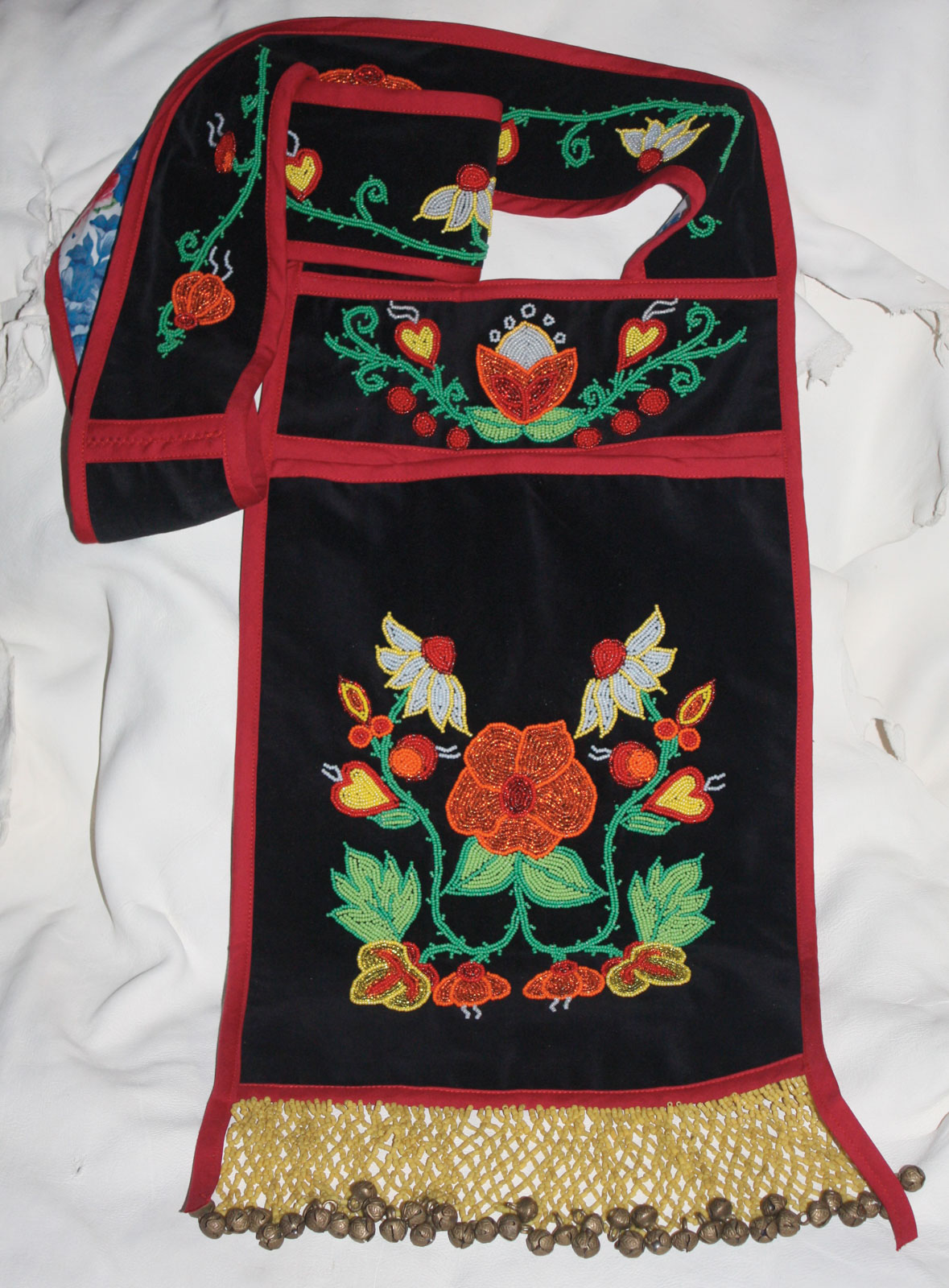
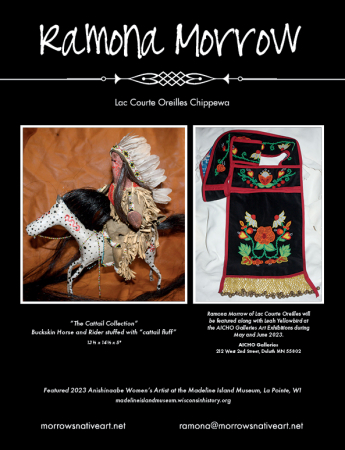
Ramona Morrow (Ojibwe), Bandolier Bag, Ojibwe-style beaded bandolier bag made from black velveteen, size-11 seed beads accented with vintage crow beads and antique bells, 12 x 46”
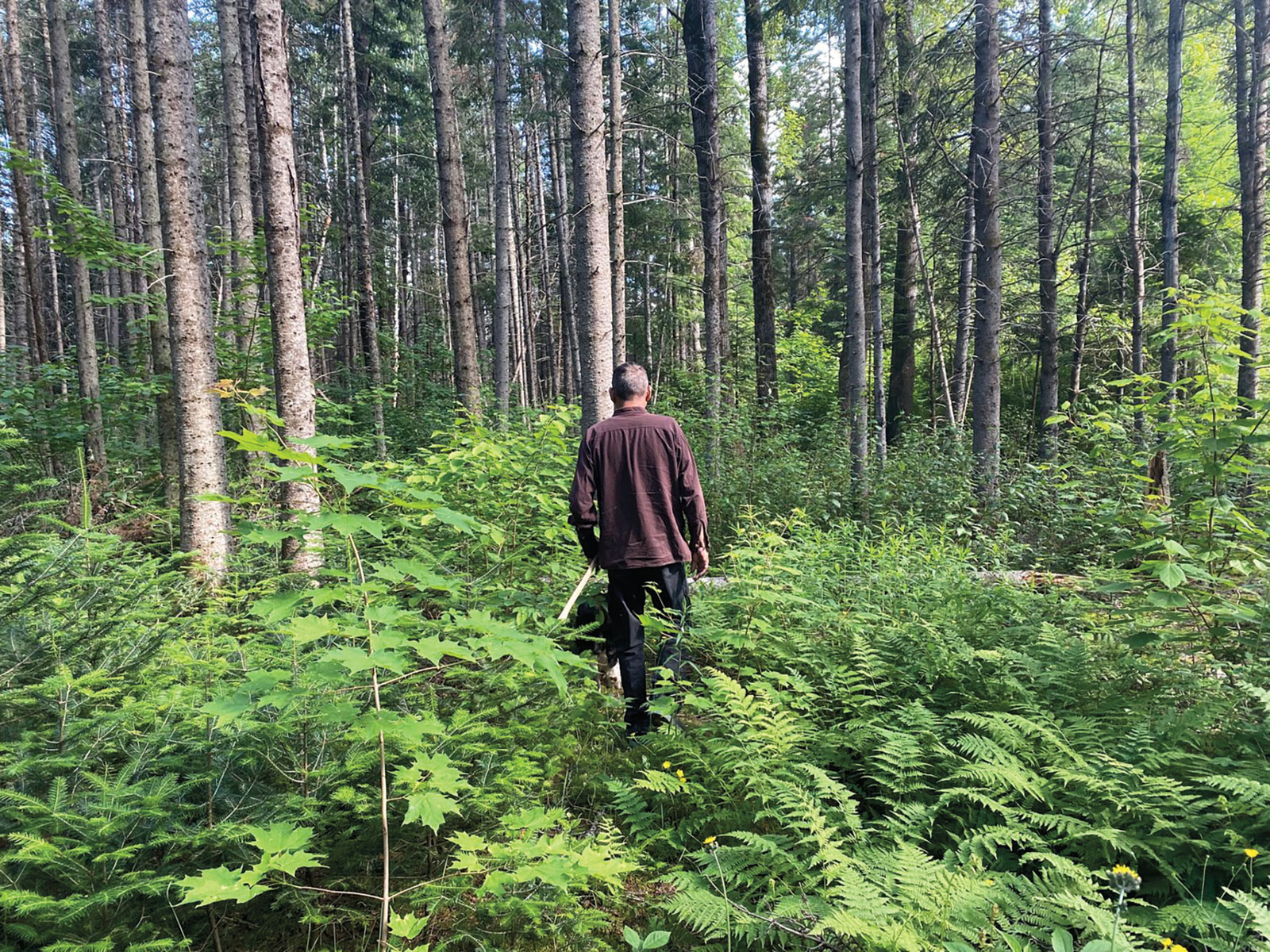
David Lone Bear (Mi’kmaq) looking for lightning-struck white cedar near his home in Maine.
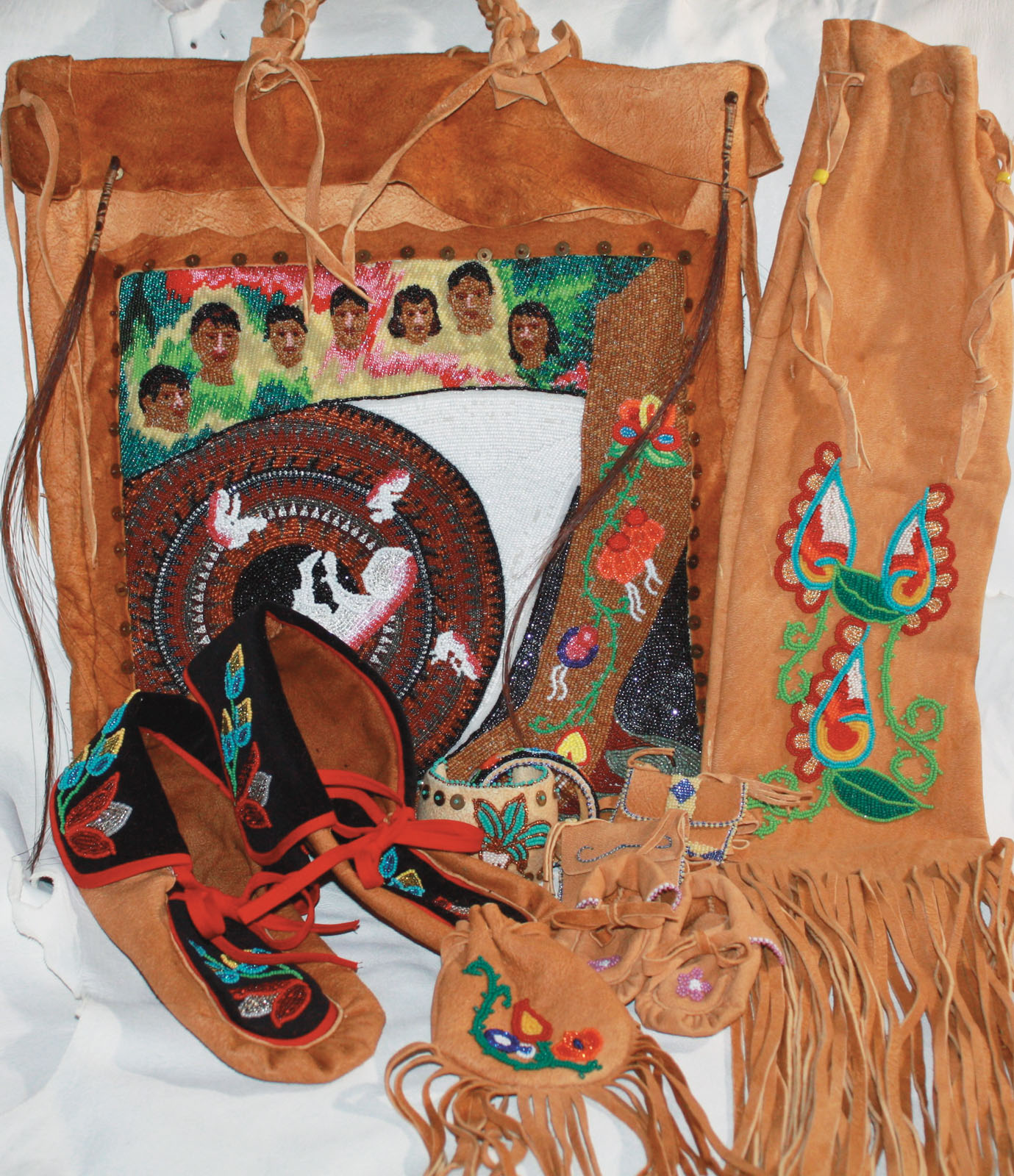
Ramona Morrow (Ojibwe), various work
One artist who has emerged from the region is Ojibwe artist Ramona Morrow, a member of Lac Courte Oreilles Band of Lake Superior Chippewa and a Yankton Sioux descendant. Morrow, who has taught at the National Museum of the American Indian in New York, also teaches at Lac Courte Oreilles University and in countless workshops. She uses a wide variety of mediums in her artwork but is primarily known for her dolls known as The Cattail Collection, as well as beadwork and moccasins. Morrow will be one of the featured Anishinaabe Women’s Artist for the 2023 season at the Madeline Island Museum at La Pointe, Wisconsin. The exhibit will feature female artists from across the region.
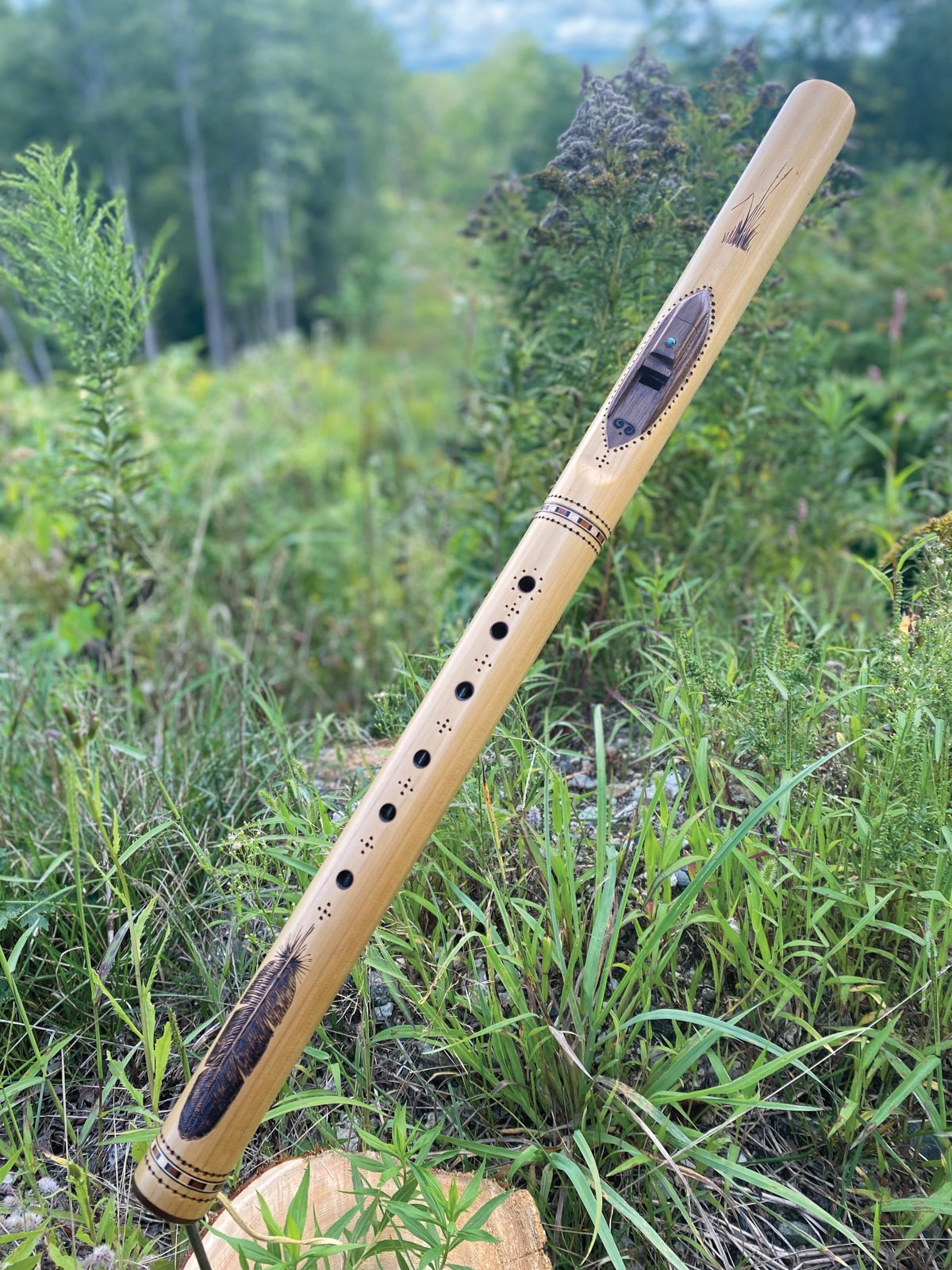
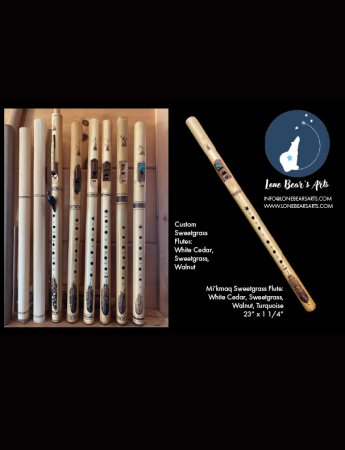
David Lone Bear (Mi’kmaq), Sweetgrass Flute, white cedar, sweetgrass, 24 x 1¼”
Another artist that is creating unique work in the Northeast Woodlands is Mi’kmaq artist David Lone Bear, who makes traditional Mi’kmaq northern block flutes. “I enjoy making my flutes because it is part of my memories of my grandfather,” Lone Bear says. “And it keeps our heritage somewhat alive.”
The artist walks through the woods of Northern Maine to find the right cedar tree. It will be pointed out to him, but sometimes this takes several days to find. The flutes are then carved by hand, often with hand-made tools. “Each is different from the last,” Lone Bear says. “It all begins with finding the right tree.”
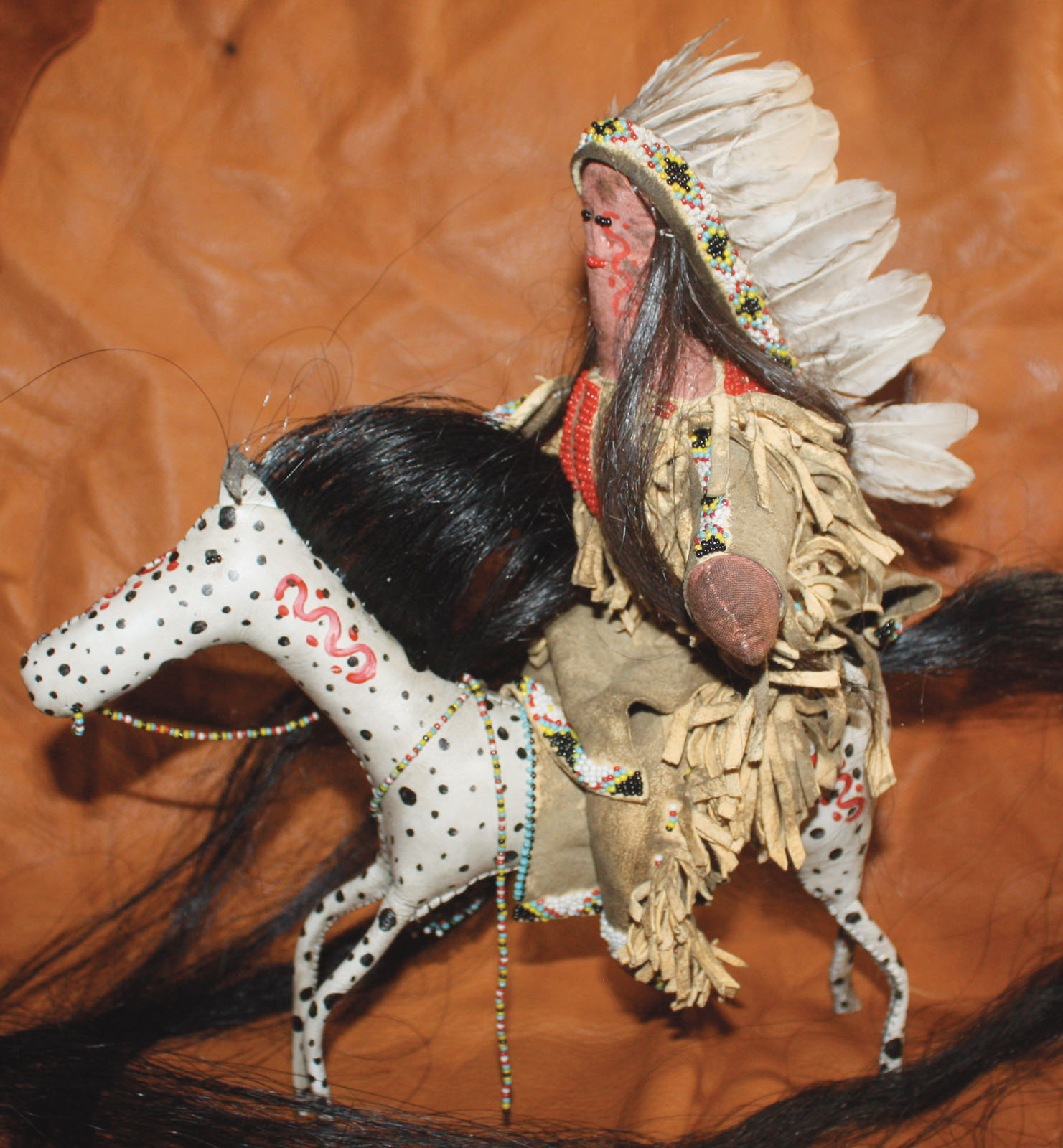
Ramona Morrow (Ojibwe), The Cattail Collection: Doll #212, Horse #50, dolls are dyed muslin, and then dressed, beaded and adorned with accessories; horses are made of buckskin; all dolls are stuffed with “cattail fluff,” 13½ x 14½ x 5”
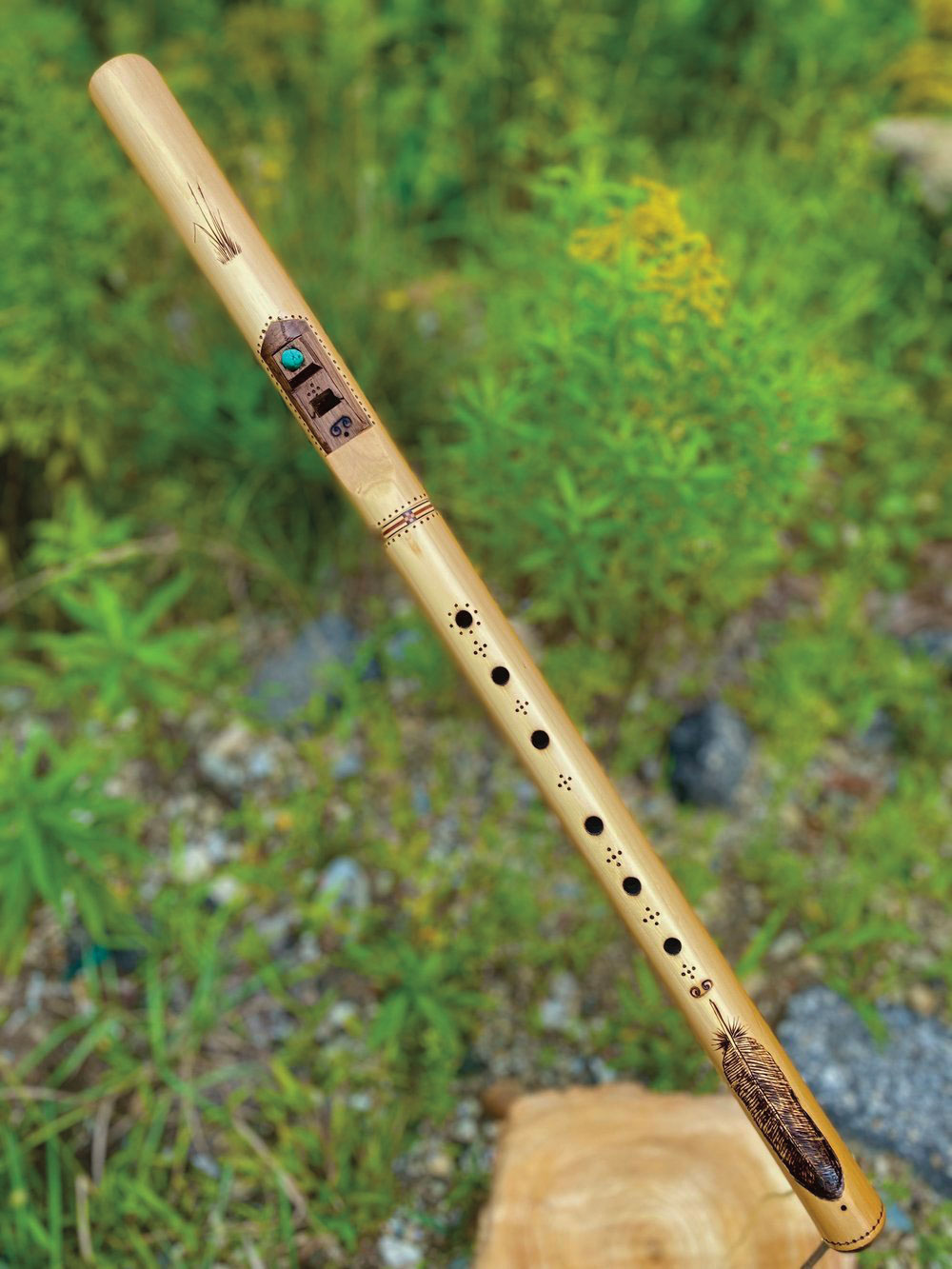
David Lone Bear (Mi’kmaq), Sweetgrass Flute with Turquoise Bead, white cedar, sweetgrass, turquoise, 24 x 1¼”
Featured Artists
Ramona Morrow (Ojibwe)
(715) 699-5234, morrowsnativeart.net
David Lone Bear (Mi’kmaq)
Norway, Maine info@lonebearsarts.com www.lonebearsarts.com
Powered by Froala Editor